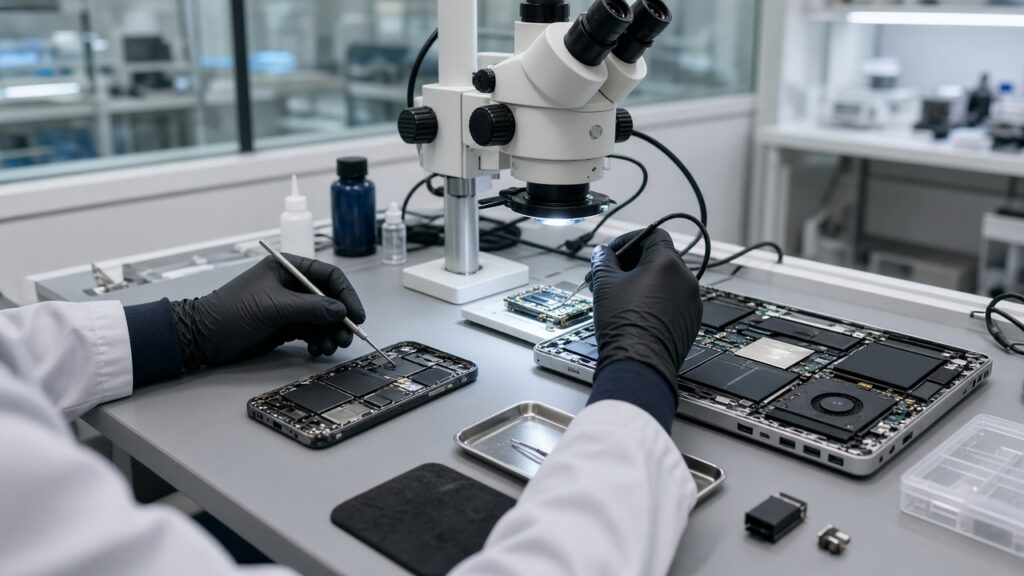
We are a repair shop, not a research lab. Still, the last year changed the tools customers bring to WhatsApp and the paperwork around spare parts. AI shows up in DIY apps. Lawmakers keep poking at parts pairing. Here is what that means for phone and laptop repair, with links to the sources we used.
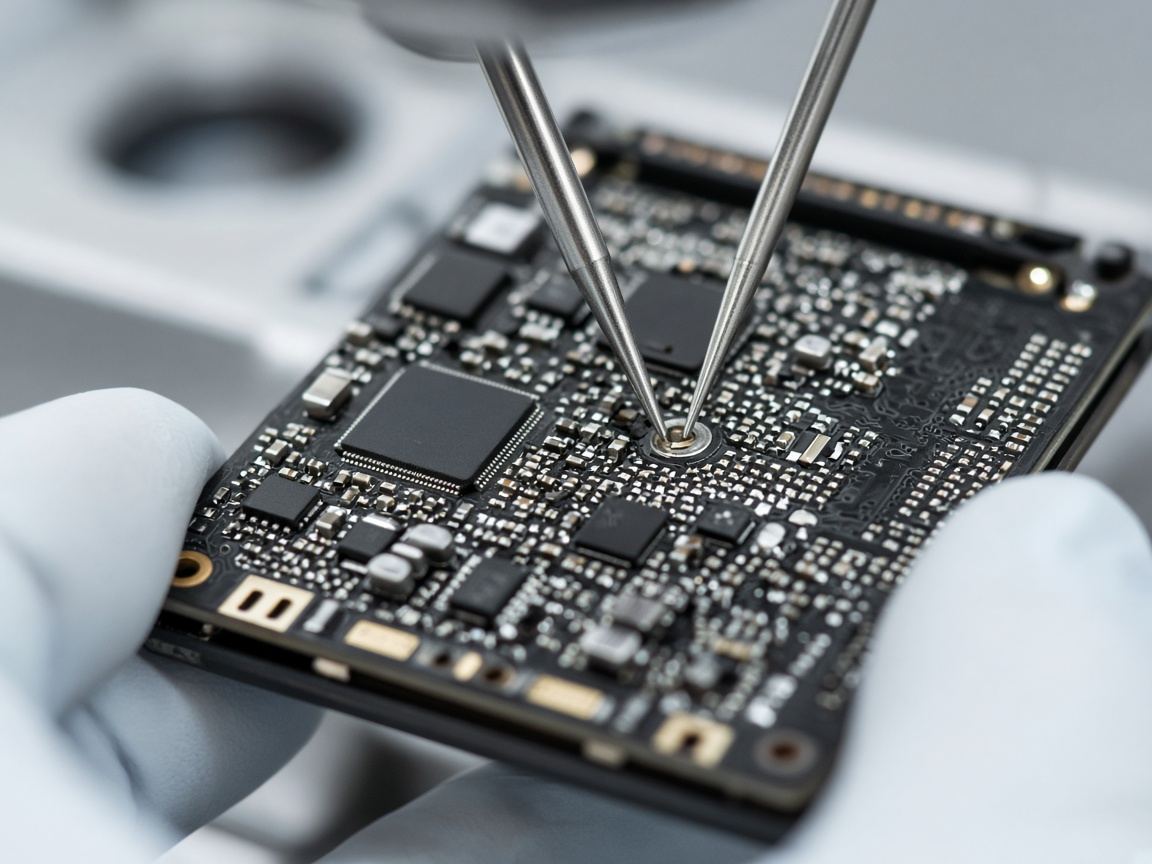
AI that helps you open the device
In late 2025 iFixit launched FixBot inside its repair app: identify a device from a photo, pull a matching guide, walk the steps. The Verge’s hands-on was less glowing about hard cases, which matches what we see. Great for screw families and guide matching. Weak for intermittent board faults where the photo looks fine.
ASUS’s 2026 service update describes ASUS Repair Assistant, which uses the camera to spot which disassembly stage you are in on selected notebooks. That is OEM-sanctioned DIY, not a third-party shop tool, but it shows where support channels are heading.
Customers already paste symptom lists into chatbots before they message us. A tidy list saves time. Where it goes wrong is confidence. Models will rank “replace motherboard” first because that phrase is common online, even when the fault is a torn flex. We still confirm with meters. If you want a human pass without the theatre, use our free online diagnosis form.
Parts pairing is the bigger fight
AI gets the headlines. Parts pairing decides whether an independent shop can finish the job after the part is fitted. Batteries, screens and cameras often carry serialised chips. Outcomes range from a warning, to lost True Tone or battery health, to a part that refuses to work until an authorised tool talks to the vendor. A clear 2026 explainer is Parts Pairing and Right to Repair in 2026.
Colorado’s electronics right-to-repair rules took effect in January 2026 and restrict pairing that blocks or degrades replacement parts for covered devices first used there after 1 January 2026 (Resource Recycling). EU smartphone and tablet ecodesign rules from June 2025 pushed spare-part availability; TechRadar’s one-year check notes laptops sat outside that specific phone/tablet package.
Singapore is not Colorado or the EU. We still feel the hardware those markets force OEMs to redesign. When pairing stays aggressive, we warn you before the job about calibration limits on iPhone, iPad and MacBook work.
Summary
| Thing | What it is | Useful for | Limit |
|---|---|---|---|
| iFixit FixBot | AI repair guide in iFixit’s app | DIY steps, part ID | Not a substitute for board diagnosis |
| ASUS Repair Assistant | OEM camera-guided notebook DIY | Supported ASUS models | Selected models only |
| Chatbot triage | Symptom sorting before WhatsApp | Clearer intake | Overconfident on board swaps |
| Parts pairing laws (US/EU) | Limits on software-locked parts | Longer-term design pressure | Does not directly rewrite SG law |
Use AI to prepare questions, not to authorise a full teardown you have never done. Ask whether a replacement screen or battery needs pairing. Prefer workshops with board-level gear when the fault is power-related. When the machine holds your work week together, book a real slot. Tanjong Pagar walk-ins are Monday to Saturday, 11am to 7pm.
FAQ
Can AI diagnose my phone from a photo?
Sometimes for cracked glass or a swollen battery. Not reliably for no-power faults.
Will US or EU right-to-repair laws change repairs in Singapore?
Not directly. They change how global OEMs design parts and software, which eventually shows up here.
Should I try FixBot before coming in?
For simple DIY with a clear guide, sure. For liquid damage or data recovery, message us first.
Book a human
Book a repair, walk into Tanjong Pagar or Woodlands, or WhatsApp +65 9779 2009 with the model and two photos.